
Depression Treatment
Soul-sucking. Torture. Feeling as if everything is falling apart… depression can be overwhelming. There is hope, however. There are many treatments – both old and new, and all evidence-based – that can make a real difference in the lives of those affected.

What is Depression?
Depression is so much more than feeling down or sad. From your work performance to family relationships and more, depression affects all aspects of life – including your physical health. That’s why depression treatment can make a big difference. The first step is recognizing there may be a problem. Sometimes this can be tricky, as the symptoms of depression are more wide-ranging than most realize.
Depression Symptoms
Known as major depressive disorder or clinical depression in the treatment world, depression encompasses a host of mental and physical symptoms:
- Anger
- Brain fog
- Depressed mood
- Feeling guilty or
worthless - Frustration
- Inability to make decisions
- Thoughts of death
- Irritability
- Lack of energy/fatigue
- Loss of pleasure in activities previously enjoyed
- Memory issues
- Physical pain that is unexplainable (headaches, etc.)
- Inability to concentrate
- Sadness
- Slowed thoughts and movements
- Loss of pleasure in activities previously enjoyed
- Suicidal thoughts, with or without a plan
- Trouble sleeping (or sleeping too much)
- Weight change (loss or gain)
In addition to the above, increased aggression and risk-taking can be signs of depression. Self-harm can also be a symptom of severe depression.
It’s important to realize that addiction and depression have a two-way relationship. Depression can both fuel addiction and be triggered by drugs or alcohol as well.
Depression manifests differently in each individual. Therefore, not everyone will exhibit all symptoms listed above. Individuals may also differ in the expression of symptoms as well. Some lose weight while others gain (and still others neither gain nor lose). Some are aggressive and irritable; some are sad and lack energy.
It’s no wonder some people may miss the fact that depression may be at the root of their issues. They may simply find themselves thinking, “I don’t feel like myself anymore.”

How Depression Feels
Although it may be hard to recognize depression from the outside (and even from the inside), we can be grateful that so many people have lent their voices to defining how depression feels.
A Heavy Weight
Many characterize depression as a heavy weight – whether it is one they carry or are trapped under. It is especially challenging because others don’t understand what the person with depression is feeling.
“It’s like dragging around a massive stone, holding you back and weighing you down. Like when you’re at the gym and you just can’t see how you can push forward with even one more rep, and everyone else around you is doing fine.”
G.M. (BlurtItOut.org, 2017)
“When I was younger, I described it as feeling as though I had been run over by a bus – not that it was painful, but that it was this huge weight on top of me that I couldn’t move. People were always saying I should “do this” or “try that” but they couldn’t understand that I was pinned under it and couldn’t get out”.
HJC (BlurtItOut.org, 2017)
“It’s a ten-ton ball of lead in your gut that you’ve no choice but to drag everywhere with you. And you’ve got to try and look normal doing so.”
HJC (BlurtItOut.org, 2017)
A Heavy Weight
Many characterize depression as a heavy weight – whether it’s one they carry or are trapped under. It is especially challenging because others don’t understand what the person with depression is feeling.
“It’s like dragging around a massive stone, holding you back and weighing you down. Like when you’re at the gym and you just can’t see how you can push forward with even one more rep, and everyone else around you is doing fine.”
G.M. (BlurtItOut.org, 2017)
“When I was younger, I described it as feeling as though I had been run over by a bus – not that it was painful, but that it was this huge weight on top of me that I couldn’t move. People were always saying I should “do this” or “try that” but they couldn’t understand that I was pinned under it and couldn’t get out”.
HJC (BlurtItOut.org, 2017)
“It’s a ten-ton ball of lead in your gut that you’ve no choice but to drag everywhere with you. And you’ve got to try and look normal doing so.”
HJC (BlurtItOut.org, 2017)
Lack of Energy
The exhaustion of being depressed is real. Others may not be able to perceive it, but it’s there. And can cause problems in your daily life.
“At my worst it also hurts, physically. I become very tired and can barely move. Everything becomes a task in and of itself, the main one being trying to switch my mind off, to cease that criticizing voice that aims to beat you down for your ‘weakness’ and general uselessness…”
BlurtItOut.org, 2017
“I call it the low. It’s like dragging yourself through calve-deep mud with no energy; you can move forward, but the effort just seems more and more taxing until you just want to sit down and stop walking. Then, you wallow.”
Lack of Energy
The exhaustion of being depressed is real. Others may not be able to perceive it, but it’s there. And can cause problems in your daily life.
“At my worst it also hurts, physically. I become very tired and can barely move. Everything becomes a task in and of itself, the main one being trying to switch my mind off, to cease that criticizing voice that aims to beat you down for your ‘weakness’ and general uselessness after…”
BlurtItOut.org, 2017
“I call it the low. It’s like dragging yourself through calve-deep mud with no energy; you can move forward, but the effort just seems more and more taxing until you just want to sit down and stop walking. Then, you wallow.”
Numbness
Some describe a void in which they are stuck. They feel numb, empty, lacking in emotions or feelings… except negative ones in some cases.
“Like the death eaters in Harry Potter have caught you and sucked all the goodness from you.”
Baker, 2014
“Numbness. You want any emotion, not just to be happy. Being angry or sad would be better than numb..”
VS (BlurtItOut.org, 2017)
“Feeling hollow but heavy and dead on the inside, unable to remember what it feels like to feel the warmth of an emotional connection with another person.”
SF (BlurtItOut.org, 2017)
Numbness
Some describe a void in which they are stuck. They feel numb, empty, lacking in emotions or feelings… except negative ones in some cases.
“Like the death eaters in Harry Potter have caught you and sucked all the goodness from you.”
Baker, 2014
“Numbness. You want any emotion, not just to be happy. Being angry or sad would be better than numb..”
VS (BlurtItOut.org, 2017)
“Feeling hollow but heavy and dead on the inside, unable to remember what it feels like to feel the warmth of an emotional connection with another person.”
SF (BlurtItOut.org, 2017)
Despair
Uncontrollable feelings of sadness, despair, and worthlessness are aspects that many people with depression point to when describing their experience.
“It can be like having the top layer of my skin removed. Everything feels much more sensitive: for me, it’s like everything people say points to me being disgusting or worthless.”
MK (BlurtItOut.org, 2017)
“Like a black raincloud following you around constantly. Whenever you try to escape, it just pours rain on you to remind you it will never leave and never let you escape and be happy.”
JS (BlurtItOut.org, 2017)
“Like you’re in a black hole of despair, you actually believe it won’t ever get better, and everything, even simple day-to-day tasks, are overwhelming.”
“Ever randomly think about something extremely embarrassing that happened years ago, something you wish you could forget? Something so awkward and painful to remember but you can’t just get rid of? Well, that’s all day. Every day. Except you aren’t remembering it, you are living it. Every time you look in the mirror, you look horrible, like you did when you were an awkward teenager with a bad haircut and a bad hair day in ugly clothes. It’s that “what was I thinking?” feeling every time you get dressed. Every interaction you have with people is awkward and oppressive. I should have said this, done that, maybe if I was someone else, I’d get a handle on it. Everything you have, and everything you do, is inadequate compared to other people. You just can’t get a handle on it. You don’t know how.”
Despair
Uncontrollable feelings of sadness, despair, and worthlessness are aspects that many people with depression point to when describing their experience.
It can be like having the top layer of my skin removed. Everything feels much more sensitive: for me, it’s like everything people say points to me being disgusting or worthless.”
MK (BlurtItOut.org, 2017)
“Like a black raincloud following you around constantly. Whenever you try to escape, it just pours rain on you to remind you it will never leave and never let you escape and be happy.”
JS (BlurtItOut.org, 2017)
“Like you’re in a black hole of despair, you actually believe it won’t ever get better, and everything, even simple day-to-day tasks, are overwhelming.”
“Ever randomly think about something extremely embarrassing that happened years ago, something you wish you could forget? Something so awkward and painful to remember but you can’t just get rid of? Well, that’s all day. Every day. Except you aren’t remembering it, you are living it. Every time you look in the mirror, you look horrible, like you did when you were an awkward teenager with a bad haircut and a bad hair day in ugly clothes. It’s that “what was I thinking?” feeling every time you get dressed. Every interaction you have with people is awkward and oppressive. I should have said this, done that, maybe if I was someone else, I’d get a handle on it. Everything you have, and everything you do, is inadequate compared to other people. You just can’t get a handle on it. You don’t know how.”
Isolation
Many of those suffering from depression describe a feeling of being cut off from the world – by an actual barrier or another kind of separation. Although they may be surrounded by others, they feel as if they are in another, unreachable place:
“Living with depression is like existing on another plane of reality parallel to the one of those around you. On this plane, time moves more slowly, things are heavier, and everything is a little bit grey. I find this particularly painful when it comes to those I love because I can never quite seem to connect with them from where I am even though I can see them right there.”
BLH (BlurtItOut.org, 2017)
“The worst part is that it’s a very “alone” feeling, something you have selfishly, like you’re hoarding it. Two depressed people sitting right next to each other will each feel a low of their own, convinced the other couldn’t possibly understand it.”
“Depression is silence. It’s total isolation in a room full of people. It’s feeling the drag and pull of life making you smaller by the day.”
Baker, 2014
Isolation
Many of those suffering from depression describe a feeling of being cut off from the world – by an actual barrier or another kind of separation. Although they may be surrounded by others, they feel as if they are in another, unreachable place:
“Living with depression is like existing on another plane of reality parallel to the one of those around you. On this plane, time moves more slowly, things are heavier, and everything is a little bit grey. I find this particularly painful when it comes to those I love because I can never quite seem to connect with them from where I am even though I can see them right there.”
BLH (BlurtItOut.org, 2017)
“The worst part is that it’s a very “alone” feeling, something you have selfishly, like you’re hoarding it. Two depressed people sitting right next to each other will each feel a low of their own, convinced the other couldn’t possibly understand it.”
“Depression is silence. It’s total isolation in a room full of people. It’s feeling the drag and pull of life making you smaller by the day.”
Baker, 2014
Out-of-Control Thoughts
Others vividly describe feeling as though they are not quite in the driver’s seat of their own minds and thoughts.
“I have been describing it recently as a guy inside my head shouting at me and telling me I’m s—, 24 hours a day.”
CM (BlurtItOut.org, 2017)
“Depression is like someone else having the remote control and constantly switching channels without asking you what you would like to watch.”
BlurtItOut.org, 2017
It’s like someone is scribbling in your head, jumbling up thoughts, words, and the ability to do things in a logical order. It’s like fingernails down a blackboard, screeching in your head“.
TG (BlurtItOut.org, 2017)
Out-of-Control Thoughts
Others vividly describe feeling as though they are not quite in the driver’s seat of their own minds and thoughts.
“I have been describing it recently as a guy inside my head shouting at me and telling me I’m s—, 24 hours a day.”
CM (BlurtItOut.org, 2017)
“Depression is like someone else having the remote control and constantly switching channels without asking you what you would like to watch.”
BlurtItOut.org, 2017
It’s like someone is scribbling in your head, jumbling up thoughts, words, and the ability to do things in a logical order. It’s like fingernails down a blackboard, screeching in your head“.
TG (BlurtItOut.org, 2017)
A Game You Want to Quit, But Can’t
Some people with depression give vivid descriptions of how it feels to try to go about life while being hamstrung with this mental condition.
“Imagine your life is a computer game that you can’t ever switch off. There are game modes: beginner, intermediate, and expert. It’s a game that you’ve never heard of, and you didn’t even want to play it, but you’re forced to play the expert mode – and you don’t have any instructions. Others around you are playing on beginner’s mode, and they’re finding it really fun – there are challenges on all modes, but it seems it’s easy for others to complete them. They’re smiling and laughing and having a great time. They say “but it’s easy, you just have to …” but for some reason, even if you put in the same amount of effort as everyone else, you can’t do it. Very quickly you lose motivation because you don’t want to play this game anymore. But you’re not allowed to quit playing.”
REW (BlurtItOut.org, 2017)
What Causes Depression?
Depression can be a lifelong condition with genetic, environmental, or personality origins. It can also spring up in response to events such as financial problems, job loss, or a divorce. Any major change in life – even a good one – can bring on depression. As mentioned previously, medications and substance abuse can also cause depression.

Genetics and Depression
In some cases, genetics are at the root of depression. Studies of twins tell us that the chance of inheriting it from family members is an estimated 37 percent. (Mullins & Lewis, 2017)
Just what genetic differences cause depression escaped researchers until relatively recently.
In 2019, a series of genetic analyses of over 800,000 people using 23andMe, UK Biobank, and Psychiatry Genomics Consortium found 102 genetic variants, each independently linked to depression, along with 269 genes and 15 gene sets that were associated with it. They also found that the pre-fontal region of the brain to have a significant role in depression. (Ktori, 2019)
It’s important to understand, though, that while you may have a genetic propensity to develop depression, this doesn’t mean you necessarily will. Obviously, there can be other factors at play.

Being Neurotic
Neuroticism is a personality trait featured in both the Big 5 and Big 3 factors of personality theories. Unfortunately, it is linked to a host of physical and mental maladies.
But what is it? Neuroticism is the tendency toward negative emotional states, feelings, and views.
You may experience more anxiety, guilt, frustration, stress, and envy than other people. You can view “everyday situations as menacing and major.” You may also feel self-conscious and get nervous or uncomfortable more easily than people with low levels of neuroticism do.
The same large genome study that identified over 100 genetic variations related to depression also found that neuroticism was a cause of depression. (Ktori, 2019)

Trauma
Developing Post-Traumatic Stress Disorder increases the chance of developing depression by three-to-fivefold. (PTSD, 2013)
The trauma-depression connection has been demonstrated in many studies. For example, the Oklahoma City bombing nearly doubled depression rates among survivors (from 13 to 23 percent). (PTSD, 2013)
This includes childhood trauma. Believe it or not, trauma experienced in childhood can still affect you as an adult. (Helm et al., 2008)
In one study, three out of four people (76 percent) who were chronically depressed also reported “significant” childhood trauma. The more traumatic experiences or the longer the abuse, the higher the chance of developing chronic depression. (Negele et al., 2015)
Of course, many of us have been through adverse childhood experiences. Six in 10 (61 percent) in one survey reported having experienced at least one ACE. One in six reported four. (Centers for Disease Control and Prevention, 2021)
- Abuse – Physical, Emotional and Sexual
- Neglect – Physical and Emotional
- Household Dysfunction – Mother treated violently, mental Illness and/or substance abuse in the household, a divorce, or an incarcerated relative.
Having an ACE increases your risk for a host of mental conditions and physical ailments, including:
- Broken Bones
- Cancer
- COPD
- Depression
- Diabetics
- Heart Disease
- Severe Obesity
- Sexually Transmitted Infections
- Stroke
- Suicide Attempts

Major Life Events
Turns out, our bodies and minds find change to be a challenge. Whether it’s a positive event (like a wedding) or a negative one (such as a job loss), the more major events you experience, the greater your stress level.
The ten most stressful life events for adults, according to the Holmes and Rahe Stress Scale, are:
- Death of a spouse
- Death of a close family member
- Divorce
- Injury or illness
- Imprisonment
- Job loss
- Marriage
- Marriage Reconciliation
- Marriage Separation
- Retirement
All these events (and more) can be triggers for depression as well as can other illnesses.
It’s not just events, though.
Your environment and circumstances can also trigger depression.
For example, living in a dangerous place, whether it be from crime, terrorism, or abuse, is associated with depression.
Not being able to afford what you need in life – living below the poverty line or making less than your expenses – can be a big stressor and a trigger for depression as well. Feeling lonely can also bring on depression.
It is important to note that depression doesn’t always occur when faced with certain events or circumstances. Two people can experience the same life event or environmental factor and only one, both, or neither may develop depression.
The difference is in your perception. The way you view stressful events and circumstances can affect whether you will develop depression. Therefore, depression treatment in the form of therapy – online or in person – can make all the difference in your life.
Chemical Imbalance in the Brain
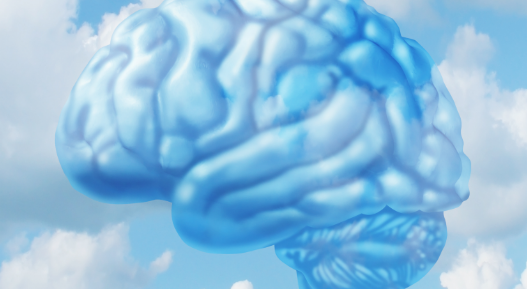
It is believed that there are functional differences in the brains of those with depression. Specifically, that there is a chemical imbalance of neurotransmitters such as serotonin.
Antidepressant medications can address these chemical imbalances directly. Selective serotonin uptake inhibitors do this by keeping serotonin levels higher than they normally would be.
Treatment for Depression
Regardless of the cause, depression can be treated.

Cognitive Behavioral Therapy (CBT)
Depression often starts with thoughts. Therefore, cognitive behavior therapy (CBT) is very effective and considered to be the gold standard for treating depression. It involves changing your thought template.
Some people tend to think and react negatively. It becomes an automatic reaction – a pattern that is hard to recognize, much less shake. CBT allows you to first identity where negative thought patterns are harming you. Then, as they happen, you replace them with positive thoughts.
With practice, over time, a new template or pattern emerges. You can find yourself reacting in a positive manner to life.
CBT can change the way your brain functions to help ward off depression. A brain scan study showed differences after 12 weeks of CBT in depressed patients versus controls. (Yoshimura et al., 2013)

Psychotherapy
More commonly known as “talk therapy,” psychotherapy aims to get to the root of depression. It uncovers long-held, unconscious beliefs that may be causing depression. Understanding why and how you got to be the way you are can be helpful in addressing depression. It is very effective over the long term. One brain study found that psychotherapy produced change in regions of the brain associated with depression. (Walton, 2018)
Anti-Depressant Medication
While therapy is working to address depression, medication can start helping to alleviate depression’s symptoms. This allows clients to gain long-term benefits while experiencing short-term results.
For those struggling under the weight of depression, medication is a very attractive add-on to psychotherapy and/or CBT. It can stabilize their emotions and help them function in everyday life.
Of course, medication can take some time to reach its full effect. This varies according to the type of medication, of which there are several.

Transcranial Magnetic Stimulation (TMS)
TMS is a painless, noninvasive procedure that stimulates the area of the brain controlling moods. It is FDA-approved and indicated for the treatment of medication-resistant depression. There are no side effects and patients are able to return to work or other activities after treatment.
Typically, about 40 sessions are recommended initially, with periodic maintenance sessions scheduled as needed. TMS can be covered by health insurance, which can be verified by your treatment provider.

Spravato (Esketamine)
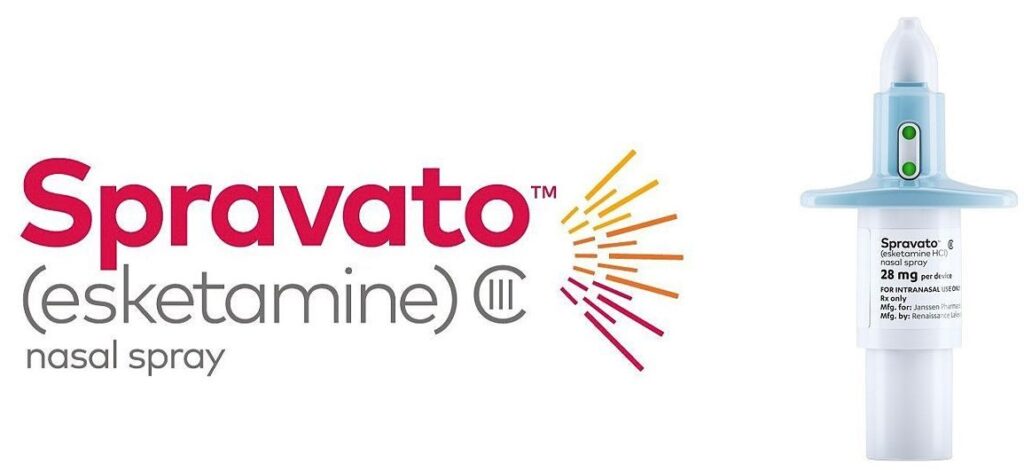
Spravato is the first and only nasal spray approved by the FDA to treat treatment resistant depression and major depression disorder.
It is a purified and more potent form of ketamine. It works quickly to ease symptoms unrelieved by other anti-depressants.
Spravato can only be administered at REMS-certified treatment centers. iMind Mental Health Solutions is the first in Port St. Lucie, Florida to offer this breakthrough treatment.
Depression can be Conquered
Depression is not a lifelong sentence. With treatment, you can overcome it. Caring, trained and licensed heath care practitioners are waiting to help you find the right path through the heavy weight of this condition.
Just as depression affects your whole life, the right depression treatment can improve your entire experience as well.
There are scientifically proven methods out there to help you, so don’t put it off. Don’t lose any more days to the black hole of depression. It’s time to rejoin the lighter side of life.

- Baker, D. (2014, July 5). 50 sufferers describe depression for people who’ve never been depressed. HuffPost UK. Retrieved October 17, 2021, from Huffington Post
- Centers for Disease Control and Prevention. (2021, April 6). Preventing adverse childhood experiences | Violence Prevention | Injury Center | CDC. Centers for Disease Control and Prevention. Retrieved October 17, 2021, from CDC.gov
- Describing depression to those who’ve never had it. The Blurt Foundation. (2017, October 7). Retrieved October 17, 2021, from Blurtitout.org
- Fiorenzi, R. (2021, January 13). What is serotonin and what does it do? Start Sleeping. Retrieved October 17, 2021, from StartSleeping.org
- Helm, C., Newport, D. J., Mietzko, T., Miller , A. H., & Nemeroff, C. B. (2008, July 7). The link between childhood trauma and depression: Insights from HPA Axis Studies in humans. Psychoneuroendocrinology. Retrieved October 17, 2021, from Pubmed.ncbi.hlm.nih.gov
- Holmes, T. H. & Rahe, R. H. (1967). The social readjustment rating scale. Journal of Psychosomatic Research, 11(192), 213-221.
- Ktori, S. (2019, October 10). Genetics of depression linked with hundreds of genes and different behavioral traits. Genengnews.com . Retrieved October 17, 2021, from Genengnews.com
- Mullins, N., & Lewis, C. M. (2017, June 13). Genetics of depression: Progress at last – springer. Springer. Retrieved October 17, 2021, from Springer.com
- Negele, A., Kaufhold, J., Kallenbach, L., & Leuzinger-Bohleber, M. (2015, October 29). Childhood trauma and its relation to chronic depression in adulthood. Depression research and treatment. Retrieved October 17, 2021, from Ncbi.nlm.nih.gov
- PTSD, N. C. for US Department of Veterans Affairs. (2013, August 15). Depression, Trauma, and PTSD. VA.gov. Retrieved October 17, 2021, from va.gov
- Reddit. (n.d.). R/askreddit – [serious] what does depression feel like? Reddit. Retrieved October 17, 2021, from Reddit.com
- Starecheski, L. (2015, March 2). Take the ace quiz – and learn what it does and doesn’t mean. NPR. Retrieved October 17, 2021, from NPR.org
- Walton, A. G. (2018, October 24). 6 strategies that science actually shows are effective for depression. Forbes. Retrieved October 17, 2021, from Forbes.com
- Yoshimura, S., Okamoto, Y., Onoda, K., Matsunaga, M., Okada, G., Kunisato, Y., Yoshino, A., Ueda, K., Suzuki, S.-ichi, & Yamawaki, S. (2013, January 16). Cognitive behavioral therapy for depression changes medial prefrontal and ventral anterior cingulate cortex activity associated with self-referential processing. OUP Academic. Retrieved October 17, 2021, from Academic.oup.com
Other Conditions We Treat

Anxiety

Stress

ADHD

Bipolar Disorder

Grief and Loss

Anger Management
And More
Anxiety
Stress
ADHD
Bipolar Disorder
Grief and Loss
Anger Management
Mental Health Resources
-

Can You Use FMLA for Mental Health?
Yes, under the FMLA, eligible employees can take up to 12 weeks of unpaid leave per year to address qualifying family-related or health issues – including mental health ones – without the fear of losing their jobs. Here are the general eligibility criteria for both employees and employers…

-
What is the Hardest Mental Illness to Have?
Mental health is a complex part of our wellbeing, deeply personal and uniquely challenging for each one of us. When it comes to mental illnesses, there is no one-size-fits-all. Each condition brings its own set of obstacles and experiences. When we ask, “What is the hardest mental illness to have?” the answer is far from…
-
Does My Child Have ADHD?
Attention-Deficit/Hyperactivity Disorder (ADHD) is a neurodevelopmental disorder commonly recognized in childhood. ADHD manifests through pronounced symptoms of distractibility, impulsiveness, and, in many cases, excessive activity that is beyond the expected behavior for a person’s age and development.

-
Can You Use FMLA for Mental Health?
Yes, under the FMLA, eligible employees can take up to 12 weeks of unpaid leave per year to address qualifying family-related or health issues – including mental health ones – without the fear of losing their jobs. Here are the general eligibility criteria for both employees and employers…
-
What is the Hardest Mental Illness to Have?
Mental health is a complex part of our wellbeing, deeply personal and uniquely challenging for each one of us. When it comes to mental illnesses, there is no one-size-fits-all. Each condition brings its own set of obstacles and experiences. When we ask, “What is the hardest mental illness to have?” the answer is far from…
-
Does My Child Have ADHD?
Attention-Deficit/Hyperactivity Disorder (ADHD) is a neurodevelopmental disorder commonly recognized in childhood. ADHD manifests through pronounced symptoms of distractibility, impulsiveness, and, in many cases, excessive activity that is beyond the expected behavior for a person’s age and development.
Latest News
-
Limerence: What It is, What Causes it, and How to Stop It
Limerence is a complex emotional state involving an intense and often overwhelming desire for an emotional connection with another person, hoping deeply for those feelings to be reciprocated.

-
Top 10 Questions About Art Therapy for Mental Health
Art therapy has recently gained recognition for its unique blend of healing therapy and personal expression. Despite its growing popularity, there seems to be some misunderstanding about what art therapy entails, who it can benefit, and how it differs from other forms of therapy.

-
ADHD Strengths: The Positive Side of Attention Deficit Hyperactivity Disorder
Scattered minds, fidgety bodies, and difficulty focusing. Attention Deficit Hyperactivity Disorder (ADHD) often gets painted in shades of struggle. But what if there’s a brighter side to the story? What if, beneath the challenges of ADHD, lie unique strengths just waiting to be unlocked?

We accept most major insurances and private pay options are available









If you do not see your insurance carrier above, please contact us to verify your benefits